New Zealand’s kakapo, the world’s only flightless parrot, was once nearly extinct, but conservation efforts have increased their population from 50 to over 200 in three decades. The nocturnal, reclusive birds live on three remote predator-free islands and are rarely seen in the wild.
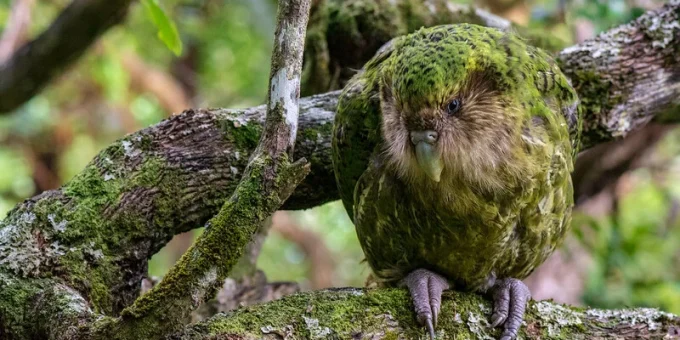
This year, a bumper crop of the parrots’ favourite berries has sparked a promising breeding season, with a livestreamed nest revealing the hatching of a chick. Kakapo can live 60–80 years, weigh over 3 kg, and have owl-like faces, whiskers, and mottled plumage that camouflages them on the forest floor. They also emit a musky, fruity scent, which made them vulnerable to introduced predators like rats, cats, and stoats.
Kakapo breed infrequently, only every 2–4 years when Rimu trees fruit abundantly. Males attract females with deep booming calls from ground bowls, and females raise up to four chicks alone. Conservationists monitor each bird with trackers, manage breeding matches, and sometimes swap eggs for incubation to protect the species.
The kakapo’s survival reflects New Zealand’s dedication to preserving its unique, native birds, which are cherished national symbols.
Photo ©️rewild.org